
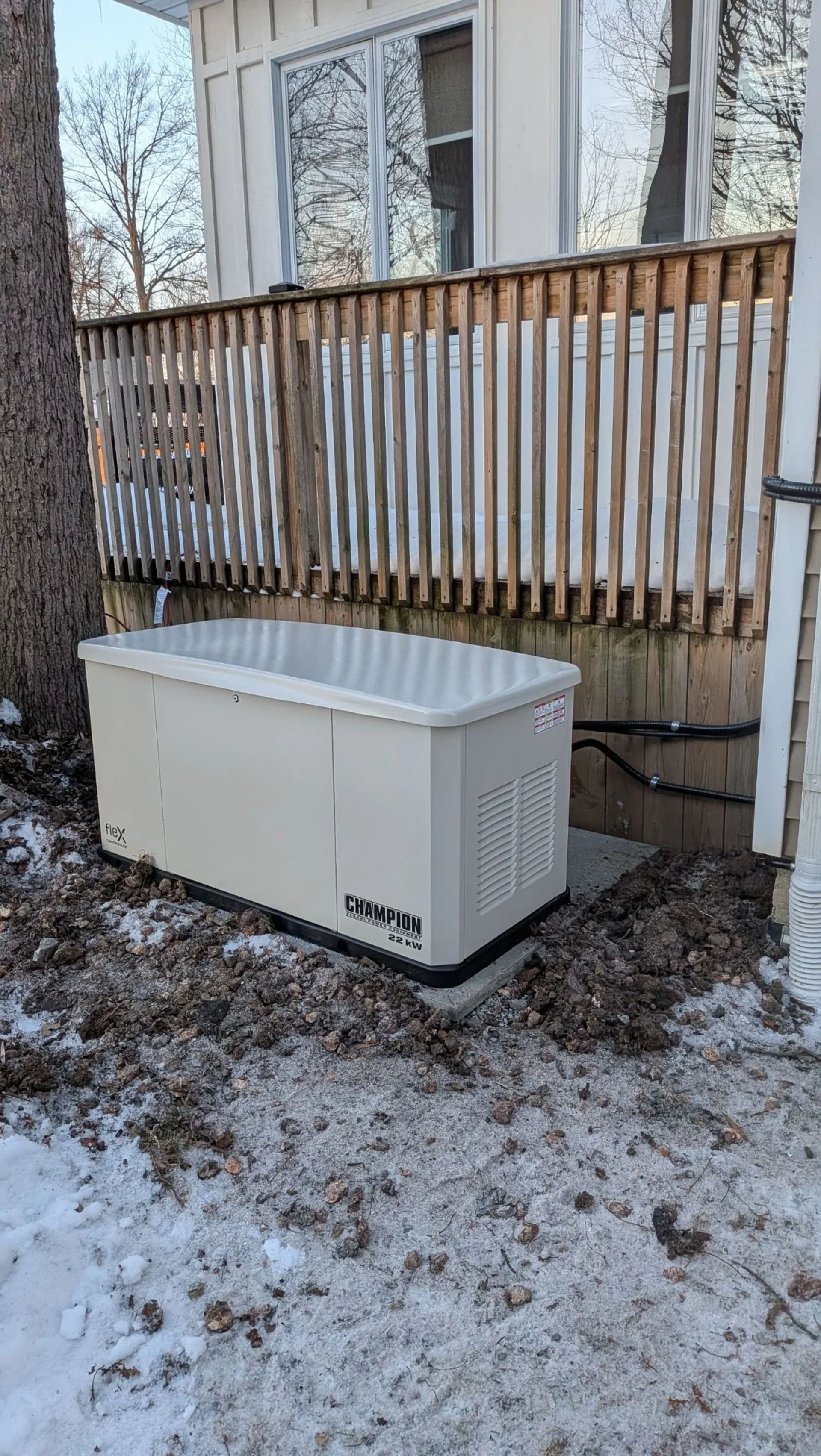
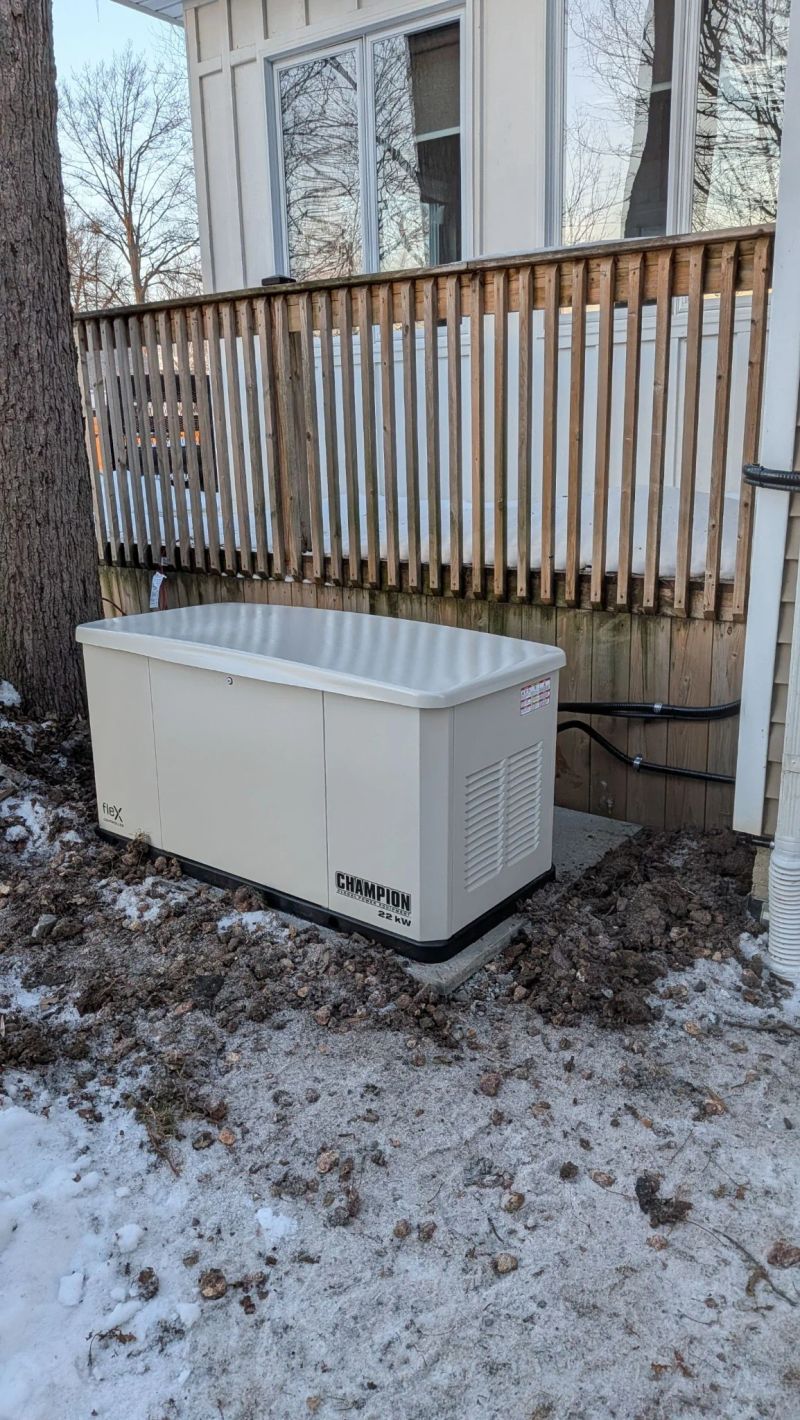
When the power goes out at your Hamilton home, having any generator is better than having none. But the type of generator you choose makes a significant difference in convenience, safety, and how much of your home you can actually keep running. Standby generators and portable generators are fundamentally different products designed for different use cases, and understanding the trade-offs helps you make a decision you will be happy with for years to come.
What Is a Standby Generator?
A standby generator is a permanently installed unit that sits outside your home on a concrete pad, much like an air conditioning condenser. It connects directly to your electrical panel through an automatic transfer switch and runs on your existing natural gas line or a propane tank. When utility power fails, the transfer switch detects the outage and the generator starts automatically within 10 to 30 seconds. You do not need to go outside, start an engine, connect cables, or do anything at all. When power is restored, the generator shuts itself down and returns your home to utility power. Standby units range from 10 kW to 26 kW for residential applications and can power your entire home.
What Is a Portable Generator?
A portable generator is a wheeled unit that runs on gasoline and produces electricity through one or more outlet receptacles. When the power goes out, you wheel the generator to a safe outdoor location at least 20 feet from any window or door, start the engine, and connect appliances using extension cords or connect to your electrical panel through a transfer switch like GenerLink. Portable generators for home use typically range from 3,000 to 10,000 watts and cost between $500 and $2,500. They require you to keep a supply of gasoline on hand and to refuel the unit every 8 to 12 hours depending on load.
Convenience and Automation
The single biggest advantage of a standby generator is that it works without any human intervention. This matters most when you are not home during an outage, when an outage strikes in the middle of the night, or when weather conditions make going outside dangerous. Your sump pump, furnace, refrigerator, and security system all keep running whether you are there or not. A portable generator requires you to be physically present, to go outside in whatever conditions caused the outage, and to set up the unit before you have any power. For homeowners who travel frequently or who simply want set-and-forget reliability, standby is the clear winner.
Safety Considerations
Portable generators pose two serious safety risks that standby units do not. The first is carbon monoxide poisoning. Portable generators produce exhaust that contains deadly levels of carbon monoxide, and they must be operated outdoors with the exhaust directed away from windows, doors, and vents. Every year in Ontario and across Canada, people are hospitalized or killed by running portable generators in garages, basements, or too close to their homes. The second risk is improper electrical connections. Without a proper transfer switch, some homeowners attempt to backfeed power into their panel by plugging a generator into a wall outlet, which is both illegal and can electrocute utility workers. Standby generators produce no indoor exhaust risk and are hardwired by a licensed electrician with proper transfer switch isolation.
Cost Comparison
The obvious advantage of a portable generator is the lower upfront cost. A quality portable unit costs a fraction of a standby installation. However, the total cost of ownership over time narrows that gap. Gasoline is more expensive per kilowatt-hour than natural gas, portable generators require more frequent maintenance and have shorter lifespans, and the cost of spoiled food or a flooded basement from a single missed outage can exceed the price difference. For Hamilton homeowners who experience outages regularly, a standby generator often proves to be the better long-term investment. For those who lose power only rarely, a portable unit with a GenerLink transfer switch offers a solid middle ground.
Ontario Code Requirements
Regardless of which type you choose, Ontario has specific requirements governing generator installation and use. Standby generators require an electrical permit, a gas permit if connecting to natural gas or propane, and an ESA inspection. Portable generators used with a transfer switch also require proper permitting. At Remarkable Electric, we ensure every installation meets Ontario code and passes inspection. If you are weighing the options for your Hamilton or Niagara home, we are happy to walk you through both paths and help you decide which makes the most sense. Reach out for a free consultation.
Related Articles
• What Is a GenerLink and Why Hamilton Homeowners Love It — /blog/what-is-a-generlink-hamilton-homeowners
• How Much Does a Whole-Home Generator Cost in Ontario? — /blog/whole-home-generator-cost-ontario
• Battery Backup vs Generator: The Pros and Cons for Hamilton Homeowners — /blog/battery-backup-vs-generator-hamilton-homeowners
➡ Learn more about our Backup Power & Generators service — /services/backup-power-generators
Our licensed electricians are ready to help. Same-day response, flat-rate pricing, lifetime warranty.
Free Estimate
Flat-Rate Pricing. No Surprises. Same-Day Response.
Call Us
(289) 210-5221Service Area
Hamilton, Niagara & Southern Ontario
Hours
Mon–Sat: 24 Hours
Sun: By Emergency Appointment Only
Our Promise
Satisfaction Guaranteed or We Come Back Free